top of page
Suche
News


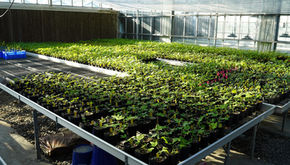
From Greenhouse to Real Cassava Fields
🔗 Published in Nature Plants: https://lnkd.in/exRiqzAe From greenhouse trials to real cassava fields — Leo Bellin shares his journey as last author. In our new Behind the Paper story, Leo reflects on what makes this publication truly special: 🌱 that the concept didn’t just work in controlled conditions, 🍃 but delivered real impact in the field. A rare milestone in applied crop science and a defining moment in his path as a young researcher.
12. Jan.


✨ Merry Christmas and a Happy New Year from CASS Research! ✨
Thank you to all our new followers, partners, and friends for supporting our mission this year. Your engagement helps us move one step closer to stronger cassava research, global food security, and long-term resilience. 🌱 We appreciate you and we look forward to continuing this journey together in 2026. Warm holiday wishes, The Cass Research Team
24. Dez. 2025


BREAKTHROUGH FOR CASSAVA PRODUCTIVITY ANDDROUGHT RESILIENCE
New study shows how targeted potassium transport improves yield and drought tolerance in cassava As published in Nature Plants on 17 December 2025 DOI: https://www.nature.com/articles/s41477-025-02159-7 An international research team from the Cassava Source-Sink (CASS) consortium has achieved an important breakthrough in cassava improvement. In their newly published paper, the scientists report that introducing a modified potassium channel gene from Arabidopsis thaliana into
18. Dez. 2025


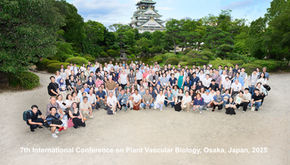
Sharing Insights on Carbon Transport – Attending the 3rd Carbon Allocation Workshop at INRAE, Versailles, France
The 3rd Carbon Allocation Workshop, held at INRAE in Versailles, France, brought together international experts to explore how plants allocate, transport, and store carbon — a fundamental process that underpins plant growth, productivity, and resilience. Carbon allocation in plants is a dynamic and multifaceted process influenced by genetics, physiology, and environmental interactions. Advances in molecular biology, biotechnology, and imaging have shed new light on how carbon
14. Nov. 2025
bottom of page